

A lead nurturing email sequence is a planned series of emails sent to prospects over time, designed to build trust and move them toward a purchase. Most leads are not ready to buy when they first contact you. A good sequence keeps your business in front of them, answers their questions before they ask, and makes you the obvious choice when they are ready. This framework covers thirty days and works for most service businesses.
In This Article
- Why Nurturing Beats Chasing
- Before You Write: The Ground Rules
- The 30-Day Sequence, Email by Email
- Days 1-2: Deliver and orient
- Days 4-7: Teach something useful
- Days 10-14: Build credibility
- Days 18-25: Create a reason to act
- Day 30: The check-in
- Writing Emails People Actually Read
- Measuring and Improving
- Keep Your List Healthy
- Frequently Asked Questions
- How many emails should a nurturing sequence have?
- What if a prospect replies in the middle of the sequence?
- Can I use the same sequence for all my leads?
- How do I know the sequence is working?
Why Nurturing Beats Chasing
When a prospect goes quiet after the first conversation, most businesses either give up or send an awkward “just checking in” message. Both lose the sale. A nurturing sequence solves this by giving you a reason to stay in touch: every email delivers something useful. The prospect learns from you, trusts you more, and remembers you when the timing is right. It also runs automatically, so no lead quietly slips through the cracks because you got busy. Nurturing sits in the middle of a wider sales funnel — it turns interest you already earned into conversations.
Before You Write: The Ground Rules
- One sequence per situation: A prospect who requested a quote needs different emails than someone who downloaded a guide. Do not send everyone the same series.
- Permission first: Only add people who gave you their email or asked to hear from you. Nurturing is not cold outreach.
- Every email earns the next one: If an email teaches nothing and asks for nothing useful, cut it. Respect the inbox or people unsubscribe.
- Plain and personal: Write like one person talking to another. Heavy design and corporate language kill trust in nurturing emails.
If you are starting from scratch, a simple lead magnet is a common way to earn that permission, and segmenting your email list keeps each sequence relevant.
The 30-Day Sequence, Email by Email
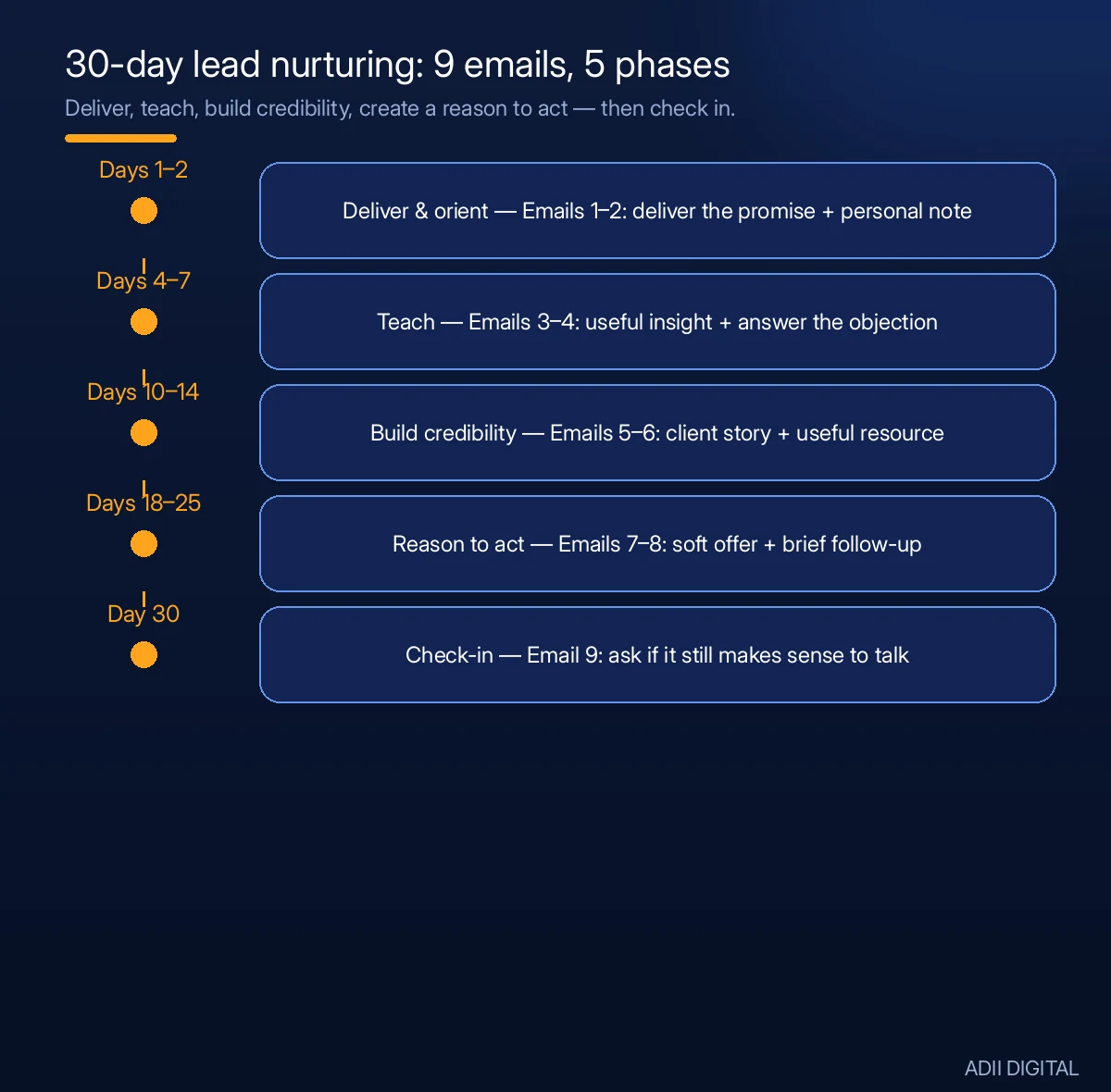
Days 1-2: Deliver and orient
Email 1 (immediately): Deliver whatever you promised, a quote, a guide, a booking confirmation, and set expectations. Tell them what happens next and when they will hear from you.
Email 2 (day 2): A short personal note from the owner or account manager. One or two sentences showing a human is paying attention goes a long way.
Days 4-7: Teach something useful
Email 3 (day 4): Share one genuinely useful insight related to their problem. For example, the three questions to ask before choosing a provider in your industry. No pitch.
Email 4 (day 7): Answer the most common objection you hear: cost, timing, or how your process works. Addressing objections early prevents them from becoming silent deal-killers.
Days 10-14: Build credibility
Email 5 (day 10): Tell a short story about a client situation similar to theirs and how it turned out. Keep it honest and specific, without inventing details.
Email 6 (day 14): Share a useful resource: a checklist, a short video, or a guide. This positions you as the helpful expert, not just another vendor.
Days 18-25: Create a reason to act
Email 7 (day 18): Make a soft offer: a free audit, a short consultation, or a limited-time benefit. The key word is soft. One clear call to action, no pressure.
Email 8 (day 25): Follow up on the offer briefly. Acknowledge they may be busy, restate the value in one sentence, and make replying easy.
Day 30: The check-in
Email 9 (day 30): A simple, honest message: ask if their situation has changed and whether it still makes sense to talk. This email often earns replies, because it respects their time.
Writing Emails People Actually Read
- Subject lines: Short, specific, and human. “A quick thought about your project” beats “ACT NOW: LIMITED TIME OFFER.”
- Length: Most nurturing emails should be under 150 words. One idea, one call to action.
- Timing: Weekday mornings in the prospect’s timezone often work well for many business audiences. Avoid weekends and late nights.
- Personalization: Use their name and reference their situation. Even basic personalization can make replies more likely.
If you need help building this out, our email marketing services include sequence strategy and copywriting for service businesses.
Measuring and Improving
Watch three numbers: open rate, reply rate, and how many nurtured leads eventually become customers. If opens are low, fix your subject lines and sender name — see how to improve email open rates. If opens are fine but nobody replies, your content is not relevant enough or your call to action is unclear. Improve one email at a time rather than rewriting the whole sequence. Our blog has more guidance on email metrics that actually matter. For the bigger picture, see our guide to developing an effective email marketing strategy.
Keep Your List Healthy
A nurturing sequence only works if your emails actually reach people. Remove hard bounces promptly, and consider a gentle re-engagement email for subscribers who have ignored your last several messages. If they still do not engage, let them go. A smaller, engaged list usually outperforms a large, cold one, and it protects your sender reputation. Also, make unsubscribing easy and visible. People who cannot find the unsubscribe link mark you as spam instead, which hurts deliverability for everyone else on your list.
Frequently Asked Questions
How many emails should a nurturing sequence have?
Six to ten emails over thirty days is the sweet spot for most service businesses. Fewer than that and you lose momentum; more than that and you risk unsubscribes unless every email is genuinely valuable.
What if a prospect replies in the middle of the sequence?
Stop the automation immediately and reply personally. Most email tools and CRMs let you pause a sequence when someone replies — see how to use HubSpot for small business for one common setup. Nothing kills trust faster than receiving a scheduled email after a real conversation has started.
Can I use the same sequence for all my leads?
You can use one structure, but tailor the content. A quote requester, a webinar attendee, and a cold lead who warmed up all need different first emails. Segment at least by how they found you.
How do I know the sequence is working?
Track how many nurtured leads book calls or buy within sixty to ninety days, and compare that with leads you never nurtured. The difference is your answer.