
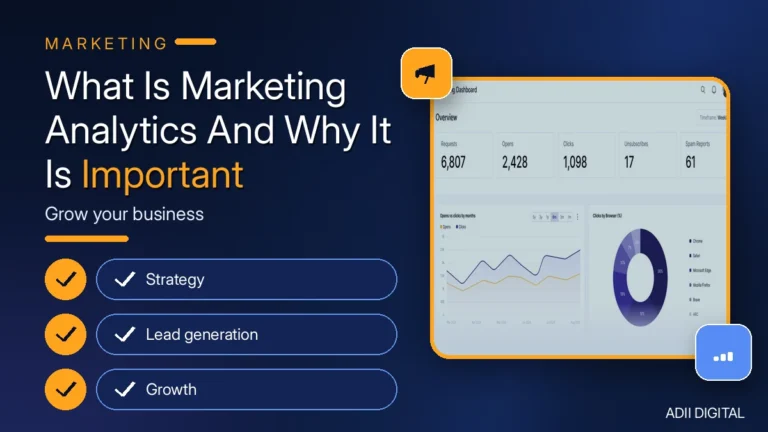
What is marketing analytics? Marketing analytics is the practice of measuring and analyzing marketing performance to improve results and return on investment (ROI). It turns data about customer behavior, preferences, and trends into insights businesses can act on — helping them target the right audience, spot new opportunities, and make smarter decisions.
Instead of guessing which campaigns work, marketing analytics shows you what is actually happening: which channels bring in customers, which messages get responses, and where your budget is doing the most good. This guide explains what marketing analytics is, where the data comes from, which tools and metrics matter, and how to use it all to make better decisions.
In This Article
- Understanding Your Target Audience Through Marketing Analytics
- Data Sources for Marketing Analytics
- Tools and Techniques for Marketing Analytics
- Key Metrics and KPIs for Audience Understanding
- Applying Marketing Analytics to Improve Audience Engagement
- Segmentation and Targeting With Marketing Analytics
- Personalization Strategies Using Marketing Analytics
- What Real-World Use Shows About Marketing Analytics
- Leveraging Marketing Analytics for Informed Decision-Making
- Frequently Asked Questions
- Conclusion
Understanding Your Target Audience Through Marketing Analytics
Marketing analytics uses data and metrics to understand customer behavior, preferences, and trends. By analyzing data from sources such as social media, website traffic, and customer interactions, businesses can gain a clear picture of who their audience is, what they care about, and how they engage with the brand.
That understanding is the foundation of effective marketing. It informs which channels to invest in, which messages to lead with, and how to shape the customer experience. If you are new to the wider discipline, our beginner-friendly guide to digital marketing explains how the pieces fit together.
Data Sources for Marketing Analytics
Good analysis starts with good data. The most common sources for marketing analytics include:
- Website analytics — traffic, page views, time on page, and conversions
- Social media platforms — reach, engagement, follower growth, and clicks
- Customer relationship management (CRM) systems — leads, deals, and customer history
- Email marketing platforms — open rates, click rates, and unsubscribes
- Sales data — revenue, order values, and repeat purchases
- Search data — the queries and pages that bring people to your site
Each source answers a different question. Website and search data show how people find you; social and email data show how they respond to you; CRM and sales data show whether that attention turns into revenue. Looking at them together — rather than in isolation — is what turns raw numbers into useful insight. Email is often one of the richest sources, so choosing the right platform matters; see our roundup of the best email marketing platforms for small businesses. Search data is equally valuable, and our guide to what SEO is explains how search visibility connects to measurable traffic.
Tools and Techniques for Marketing Analytics
You do not need an enterprise budget to start. Widely used tools include Google Analytics for website behavior, the built-in insights in platforms such as Meta and LinkedIn for social performance, and CRM or email platforms for lead and campaign reporting. Google offers free documentation for getting started with Google Analytics, which is a good first stop if you are setting it up for the first time.
Beyond the tools themselves, a few techniques do much of the heavy lifting: customer segmentation (grouping people by shared traits), A/B testing (comparing two versions of a page or message to see which performs better), and cohort analysis (tracking how groups of customers behave over time). Used together, they reveal not just what happened, but why. For a broader look at the software side, see our guide to essential digital marketing tools.
Key Metrics and KPIs for Audience Understanding
Metrics are only useful when they are tied to a goal. For most businesses, the metrics that matter most include website traffic, conversion rate (the share of visitors who take a desired action), bounce rate (the share who leave after viewing one page), customer engagement, and cost per lead or acquisition. Together, they show whether your marketing is reaching the right people and moving them toward a purchase.
The key is to compare, not just collect. A conversion rate means little on its own; compared across channels, campaigns, and months, it shows where to invest and what to fix. If traffic is a weak spot, our list of practical ways to increase website traffic pairs well with the measurement approach in this article.
Applying Marketing Analytics to Improve Audience Engagement
Analytics earns its keep when it changes what you do next. By studying which topics, formats, and channels get the strongest response, you can focus your effort where your audience already pays attention — and stop spending on content or campaigns that consistently fall flat.
Start with one loop: publish, measure, learn, adjust. Check which posts earn the most engagement, which emails get opened and clicked, and which pages lead to inquiries or sales. Then do more of what works and refine or drop what does not. Small, regular adjustments like these compound over time, and they are one of the less obvious benefits of digital marketing: steady improvement instead of guesswork.
Segmentation and Targeting With Marketing Analytics
Not every customer wants the same thing, and marketing analytics helps you stop treating them as if they do. By analyzing your data, you can group your audience by shared characteristics and behaviors — for example, new visitors versus returning customers, or buyers of one product line versus another.
Each segment can then receive messaging that fits its needs and interests, which usually improves both engagement and conversion rates. Segmentation is also the practical starting point for a focused plan; our digital marketing strategy example shows how audience segments shape a step-by-step plan.
Personalization Strategies Using Marketing Analytics
Personalization means tailoring marketing to specific audience segments — or, where you have the data, to individuals. By analyzing demographics, purchase behavior, and online interactions, businesses can create campaigns that feel relevant rather than generic: product recommendations based on past purchases, emails timed to a customer’s behavior, or landing pages that match the ad a visitor clicked.
The goal is not to collect as much data as possible, but to use the data you already have responsibly and well. Even simple personalization — such as segmenting an email list by interest — often performs better than one message sent to everyone. Done consistently, it builds stronger customer relationships and higher engagement.
What Real-World Use Shows About Marketing Analytics
In practice, businesses use marketing analytics to refine targeting, improve messaging, and focus their budgets on the channels that perform best. A retailer might discover that one traffic source brings the most repeat buyers; a service business might find that a single landing page drives most of its inquiries. In both cases, the data points to a clear next step.
The pattern is consistent: companies that measure, learn, and adjust make steadier progress than those that rely on guesswork. You do not need a perfect setup to start — a few reliable metrics, reviewed regularly, are enough to begin making better decisions.
Leveraging Marketing Analytics for Informed Decision-Making
The real value of marketing analytics is better decisions: which campaigns to scale, which to pause, where to spend, and what to test next. Data helps you weigh those choices with evidence instead of opinion, and it makes it easier to explain marketing investment to stakeholders in terms they care about — leads, sales, and revenue.
The clearest way to frame those decisions is return on investment. Our guide to understanding digital ROI walks through how to measure what your online marketing actually returns, so the numbers in your reports connect directly to business results.
Frequently Asked Questions
What is marketing analytics in simple terms?
It is the process of collecting and studying marketing data — from your website, ads, email, and social channels — to learn what works, what does not, and what to do next.
How is marketing analytics different from web analytics?
Web analytics focuses on website behavior, such as visits and page views. Marketing analytics is broader: it brings together data from every channel to judge overall marketing performance and return on investment.
Which metrics matter most for beginners?
Start with website traffic, conversion rate, cost per lead or acquisition, and engagement (opens, clicks, and interactions). These four give a clear picture of reach, response, and efficiency without overwhelming you.
How often should a small business review its marketing analytics?
A quick weekly check keeps you aware of trends and problems, while a deeper monthly review is where most planning decisions should happen. Campaign-level checks should follow each campaign’s end.
Conclusion
Marketing analytics is your compass in a competitive landscape. It goes beyond collecting numbers — it is about understanding your audience, choosing the right channels, and improving your strategy with evidence. By drawing on the right data sources, using practical tools, and focusing on a handful of meaningful metrics, businesses can fine-tune their strategies for better engagement and steadier growth.
Real-world use shows the same lesson again and again: analytics is not just about numbers, it is about connecting with your audience and steering your strategy toward what actually works. Want data-driven marketing for your business? Explore our services or get a free consultation.