
For lead generation, Google Ads works best when customers already know what they need and are searching for it, while Meta Ads works best when customers need to discover you first. Google captures existing demand; Meta creates it. Neither is universally better — the right choice depends on how urgently your customers buy, how much education they need, and how your sales process works. Many businesses eventually run both as a full-funnel combination.
In This Article
- The core difference: intent versus interruption
- When Google Ads wins for lead generation
- When Meta Ads wins for lead generation
- Cost and lead quality trade-offs
- The full-funnel combo: how to run both
- How to decide with a small budget
- Frequently asked questions
- Which platform is cheaper for leads?
- Can I use the same creative on both?
- How much budget do I need to test properly?
- Should I hire someone to manage both?
For setup basics, see our PPC starter guide for small business and our guide to lowering cost per click on Google Ads.
The core difference: intent versus interruption
Someone searching for divorce lawyer consultation is raising their hand. They have a problem, they want help, and they want it now. Google Ads puts you in front of that person at the exact moment of intent.
Someone scrolling Facebook or Instagram is not looking for a lawyer. Meta Ads interrupt their scrolling with something interesting enough to stop them — a relatable problem, a striking result, a useful offer. This reaches people earlier, before they ever search, but it asks more of your creative and your follow-up.
Neither approach is superior in the abstract. They catch people at different stages of deciding.
When Google Ads wins for lead generation
- Urgent or high-intent needs. Emergency services, legal help, medical appointments, B2B software evaluations — when people search, they are ready to talk.
- Clear, searchable demand. If customers describe their need in obvious search terms, Google Ads harvests it efficiently.
- Short sales cycles. When the path from click to conversation is short, intent-based traffic converts fast.
- Limited creative resources. Search ads need strong copy and a good landing page, not video production.
If your Meta campaigns stall, our guide to fixing Facebook Ads that are not delivering covers common causes.
When Meta Ads wins for lead generation
- Customers do not know the solution exists. New categories, lifestyle upgrades, and preventative services need awareness before search demand appears.
- Visual or emotional appeal matters. Fitness programs, home renovation, fashion, food — things people choose with their eyes do well in feeds.
- Precise audience targeting helps. Meta’s interest, behavior, and lookalike targeting can find likely buyers Google cannot identify from a keyword alone.
- You have a nurture process. Social leads often need warming up. If you follow up with email or retargeting, early-stage leads become valuable.
Cost and lead quality trade-offs
As a general pattern, Meta clicks cost less than Google clicks in competitive industries, but Meta leads often need more follow-up before they buy. Google leads typically arrive closer to a decision but cost more per lead. The number that matters is cost per customer, not cost per click or even cost per lead — track leads all the way to revenue before judging either platform.
Lead quality also depends on your forms. Meta’s instant lead forms make submitting easy, which increases volume but also casual submissions. Sending traffic to your own landing page with a thoughtful form usually improves quality on both platforms. If you outsource management, see our guide to PPC management pricing and check the current plan/pricing page before budgeting.
The full-funnel combo: how to run both
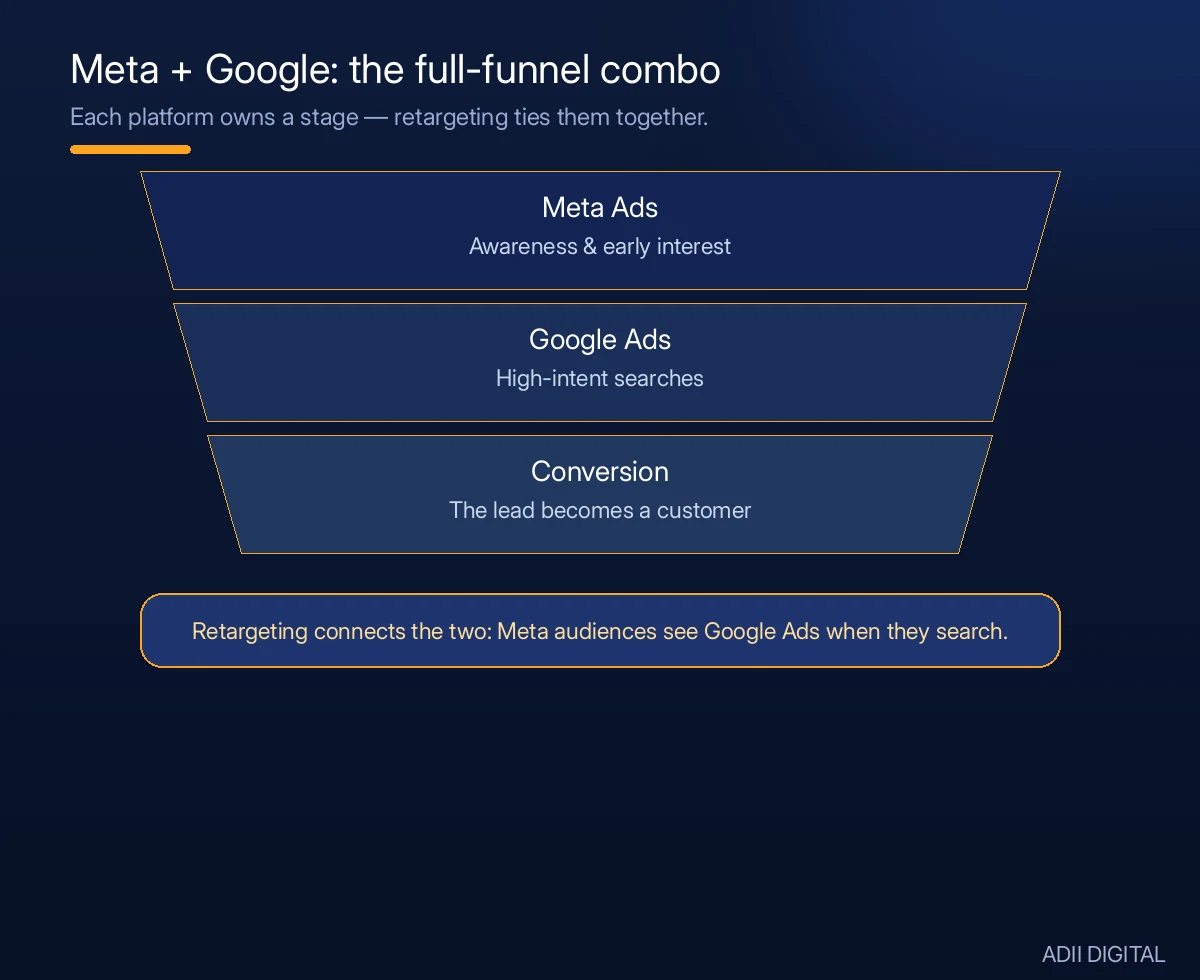
Businesses with budget for both often split roles: Meta Ads create awareness and capture early interest with useful content and lead magnets, while Google Ads catch the same people later when they search with intent. Retargeting ties it together — show Meta Ads to people who visited your site from Google but did not convert, reminding them to come back.
Start with the platform that matches your most urgent need, prove the economics, then add the second as budget allows. Running both badly is worse than running one well. Meta’s own business help center offers free guides on audience targeting and lead forms if you want to learn the mechanics before spending. Whichever platform you start with, the discipline is the same: one clear offer, one tight audience, honest tracking, and a decision based on cost per customer after a few weeks of data. Resist the urge to judge in the first days — early results are noisy, and both platforms need time to learn who converts.
How to decide with a small budget
If you can only fund one test, ask: do my customers search for what I sell? If yes, start with Google Ads — intent is the fastest path to revenue. If your service needs explaining first, or your market is visual and social, start with Meta. A strong lead magnet can help turn early Meta interest into follow-up conversations. Either way, run a focused test with proper conversion tracking, judge on cost per customer, and expand only what proves itself.
Frequently asked questions
Which platform is cheaper for leads?
Meta usually delivers cheaper leads, Google usually delivers warmer ones. Compare cost per actual customer, not cost per lead, because the platforms attract people at different stages.
Can I use the same creative on both?
Rarely. Search ads need tight, intent-matching copy — see how to improve your Google Ads click-through rate. Meta needs scroll-stopping visuals and a hook in the first seconds. Plan separate creative for each.
How much budget do I need to test properly?
Enough to generate a meaningful number of leads — for most small businesses, a focused one-month test on a single platform with a modest daily budget produces a readable result. Spreading a tiny budget across both platforms teaches you nothing about either.
Should I hire someone to manage both?
Each platform rewards specialization. If you hire help, look for demonstrated lead-generation results in your industry, not just ad spend managed. You can review what to look for in our blog guides.
Choosing between Meta and Google Ads is really about choosing where your customers are in their decision. If you want help mapping that out and running the test properly, see our digital marketing services or contact us for an honest recommendation.